Home / Articles
Do You Regret Your Implants? Removal & Natural Enhancement Options
Home / Articles
Do You Regret Your Implants? Removal & Natural Enhancement Options
Understanding Removal, Recovery, and Natural Enhancement Options**
To be honest, this is a question we hear more often than people admit out loud.
Not because breast implants are inherently problematic, or because choosing augmentation was a mistake — but because people change. Bodies change. Lifestyles shift. Priorities mature. And what once felt perfectly aligned with your identity can, years later, feel unfamiliar.
If you’re thinking about implant removal, downsizing, or natural enhancement, you’re not alone — and you’re certainly not being indecisive or vain. You’re responding to a very human realization: what felt right once may no longer reflect who you are today.
This article is not meant to convince you to remove your implants or to keep them. It’s meant to give you clarity, medical context, and reassurance — so whatever decision you make feels informed, intentional, and grounded in your current life.
Regret is a strong word, and in many cases, it’s not quite accurate. Most patients we see don’t regret having implants — they regret not being told how their relationship with their body might evolve over time.
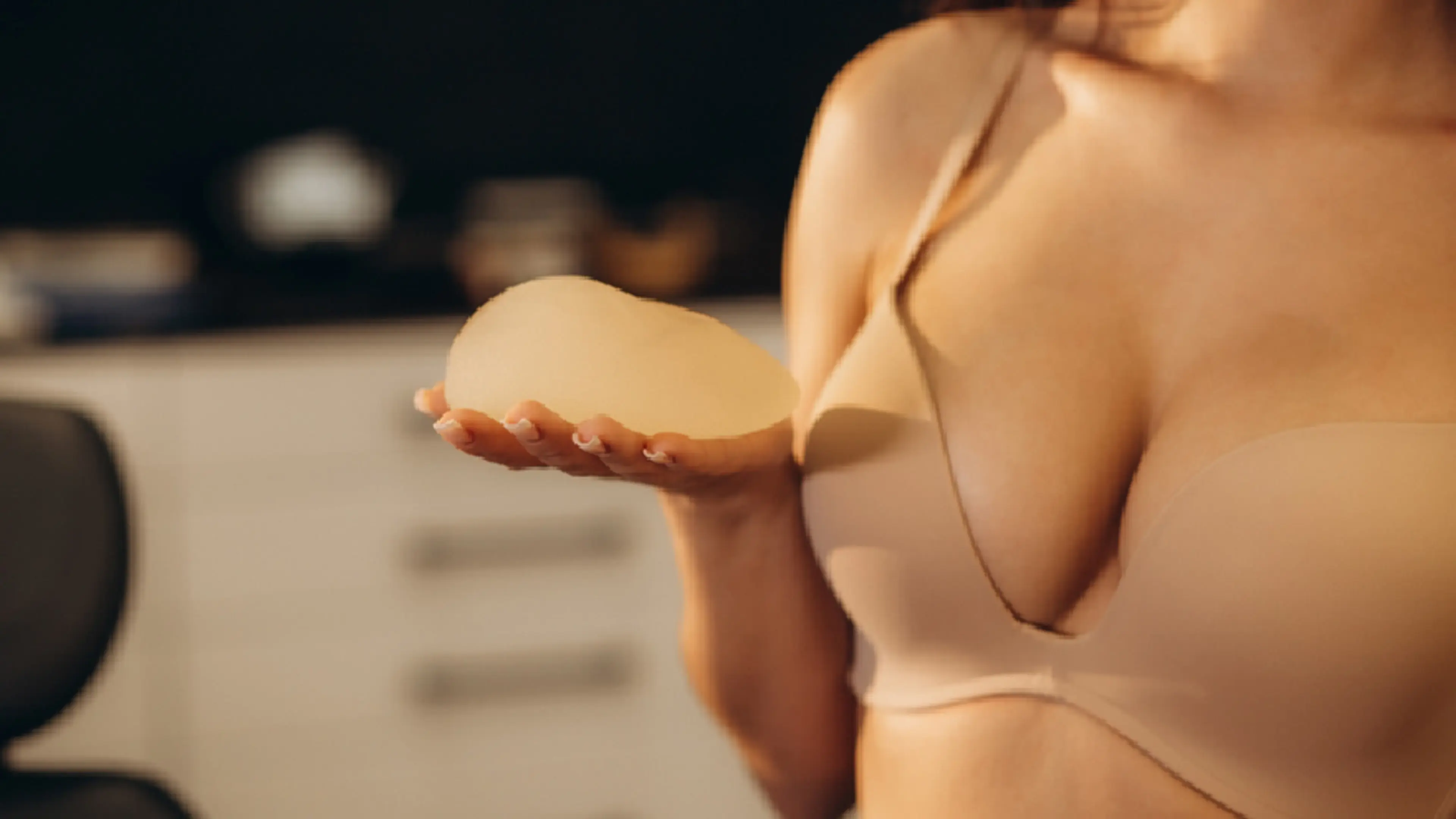
What many patients overlook is that implants are long-term medical devices placed into bodies that are constantly changing. Aging, gravity, hormonal shifts, weight fluctuation, pregnancy, breastfeeding, and lifestyle all interact with implants in ways that aren’t always obvious in the first few years.
Some of the most common reasons patients begin reconsidering their implants include:
As people grow older, their definition of beauty often becomes more refined. In South Korea especially, there has been a noticeable shift toward understated elegance and balance. Breasts that once felt empowering may later feel overly prominent or disconnected from one’s overall silhouette.
Even when implants are well-placed and medically sound, some patients begin to feel their presence. Subtle but persistent sensations — tightness, heaviness, pressure during exercise, discomfort when lying prone — can accumulate over time and affect quality of life.
Implants don’t prevent natural aging. Over the years, breast tissue may thin, skin may lose elasticity, and gravity continues its work. This can lead to visible rippling, drooping over the implant, or an unnatural upper pole that feels different from the patient’s expectations.
Capsular contracture, implant malposition, asymmetry, or concerns about long-term implant maintenance often prompt patients to explore alternatives. Even without major complications, the idea of future revision surgeries can feel burdensome.
Many patients reach a point where they simply want to feel lighter — physically and mentally. They want breasts that move naturally, respond naturally, and feel like an extension of their own body rather than something added.
Implant removal is not a step backward. It’s a reassessment — and sometimes, a recalibration.
However, it’s important to understand that removing implants without a clear plan can lead to disappointment. Breasts that have accommodated implants for years may not automatically return to their previous shape. Skin may be loose, volume may be reduced, and the emotional impact can be more complex than expected.
Every patient’s outcome is different, and predicting results requires an honest evaluation of several factors:
The size and type of implant
How long the implants have been in place
Skin elasticity and thickness
Natural breast tissue volume
Age, weight history, and hormonal factors
The surgical technique used in the original augmentation
Without any form of enhancement, some patients experience a deflated appearance, loose skin, or a lack of upper fullness. Others are surprised to find their breasts settle more naturally than expected.
Understanding these possibilities ahead of time is essential — not to discourage you, but to help you plan intelligently.
One of the most significant advancements in modern breast surgery is the ability to restore shape and softness without reintroducing implants.
Fat grafting has become a cornerstone procedure for patients seeking a natural outcome after implant removal.
The process involves gently harvesting fat from areas such as the abdomen, flanks, or thighs, purifying it, and then carefully reinjecting it into the breast tissue. This is not a single “fill,” but a layered, three-dimensional technique designed to rebuild natural contours.
Patients often appreciate fat grafting because:
It uses their own tissue
There is no foreign material involved
The breasts feel soft and natural
Body contouring is achieved simultaneously
When skin laxity is present, removing implants alone may leave the breasts lower or less defined. A breast lift can reposition the breast tissue and nipple to a more youthful, balanced position.
This does not necessarily make the breasts larger — instead, it reshapes and supports them. When combined with fat grafting, the result is often a natural, elegant breast that feels proportionate to the patient’s frame.
Some patients are not ready to fully let go of volume but want something significantly more subtle. In select cases, a smaller implant combined with fat grafting can offer a middle ground.
That said, many patients who initially consider hybrid options ultimately find that fat-based enhancement alone meets their aesthetic and emotional goals.
One aspect rarely discussed in online articles is the emotional adjustment that can accompany implant removal.
Even when the decision feels right, patients may experience unexpected vulnerability. Implants can become tied to confidence, femininity, or a specific chapter of life. Letting go of them can feel like closing a door — even if you’re ready to move forward.
Many patients tell us that after recovery, they feel more grounded. Their confidence shifts from size to comfort, from visibility to authenticity.
Implant removal with natural enhancement is technically demanding. Decisions about capsulectomy, tissue preservation, fat placement, and symmetry all influence outcomes.
Successful results depend on:
Respecting existing breast anatomy
Preserving blood supply
Managing scar tissue thoughtfully
Understanding long-term tissue behavior
Our experience with both implant-based and non-implant breast surgery allows us to offer balanced guidance. We don’t push removal, replacement, or augmentation — we tailor the approach to the patient’s body and goals.
This is one of the most honest questions a patient can ask.
In our experience, regret is rarely about the act of removal itself. It’s about feeling rushed, uninformed, or pressured into a decision that didn’t fully align with personal expectations.
Patients who take time to understand their options, prepare realistically, and choose a surgical team experienced in natural breast aesthetics almost always describe a sense of relief afterward.
If you’re questioning your implants, that question deserves respect.
You don’t owe permanence to a past version of yourself. You don’t need to justify wanting change. And you don’t have to choose between extremes.
Whether your path involves complete implant removal, natural fat-based enhancement, or thoughtful reshaping, there is a safe and considered way forward.